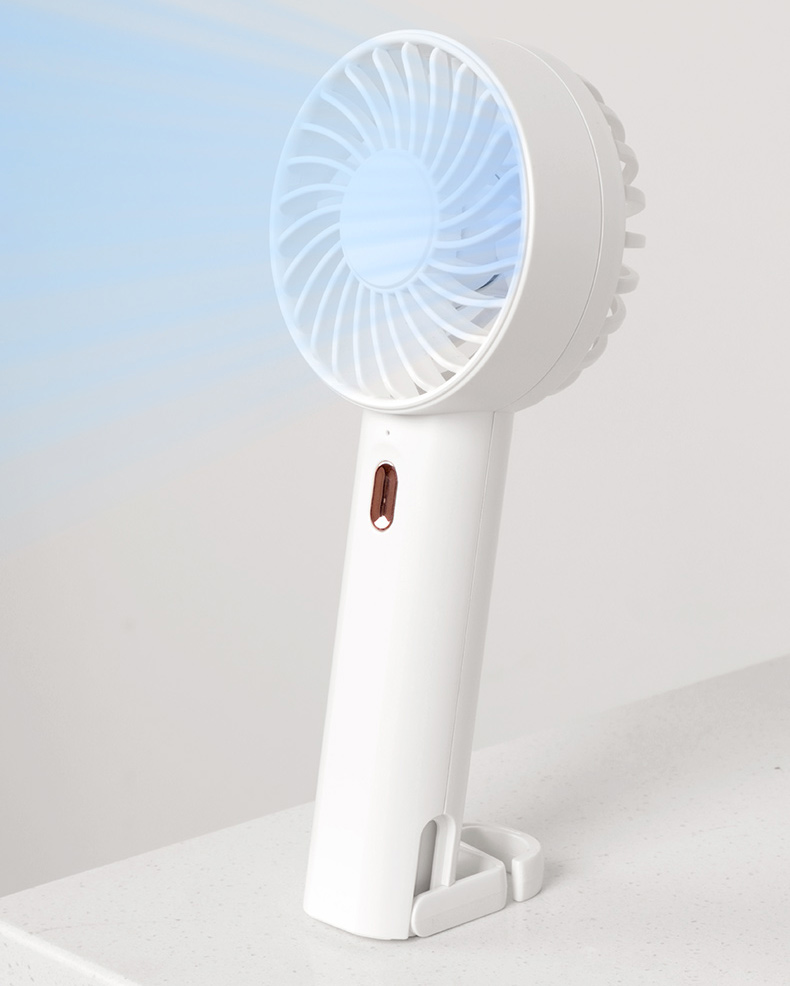
Unlimited Creativity: Mini Fans' Diverse Designs Meet Personalized Needs
Driven by both consumption upgrades and the demand for personalized expression, Mini Fans have transcended the traditional realm of home appliances, evolving into personalized carriers that combine practical functionality with aesthetic value. Industry data shows that the global market size for personalized Mini Fans grew by 57% year-on-year in 2023, with Generation Z consumers accounting for 68%, accelerating the industry's transformation from a "function-oriented" to an "experience-driven" model.
Market Trends: From Single Products to Scenario-Based Solutions
Modern consumers' demands for Mini Fans are exhibiting fragmented and scenario-based characteristics. In office settings, users seek a blend of quiet design and desktop aesthetics; in sports settings, portability and battery life are key indicators; and the children's market focuses more on safety and fun interaction. A survey by an e-commerce platform shows that over 72% of consumers are willing to pay a premium of over 20% for "exclusive designs," prompting manufacturers to shift from "mass production" to "precise customization."
This trend is particularly evident in cross-industry collaboration products. A limited-edition Mini Fan, a collaboration between a brand and an anime IP, sold out 30,000 units in its first month by incorporating character elements into the fan blade design and lighting system. Meanwhile, a wearable necklace fan co-branded with a fashion brand, featuring a modular design for multi-functionality, sparked a wave of creative fan art on social media. These examples illustrate a trend: when a product becomes an extension of user self-expression, its lifespan far exceeds that of traditional home appliances.
Design Innovation: From Structural Reconstruction to Emotional Interaction
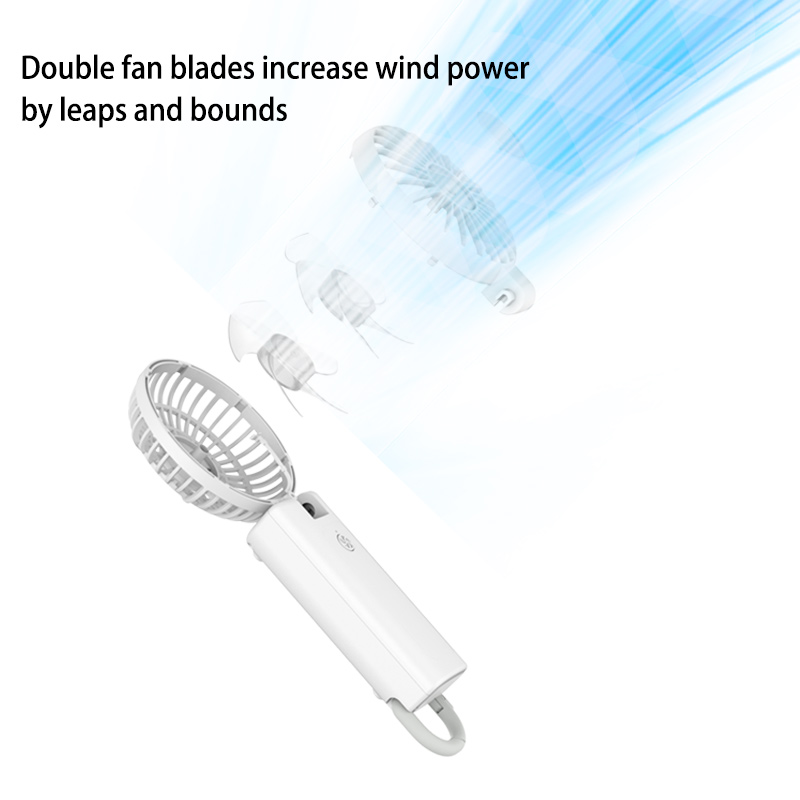
The creative revolution of the Mini Fan is first reflected in its form. Through the application of folding structures and magnetic technology, one manufacturer developed a multi-functional device that can transform into a phone stand and lamp base. Its patented hinge component supports 180-degree stepless adjustment, meeting users' needs in different scenarios. Another product, with a transparent acrylic shell, creates a "starry sky effect" through built-in quicksand and LED light strips, becoming a popular prop for young users to take photos.
On the interaction level, the introduction of intelligent sensing technology redefines the human-computer interaction. A concept product equipped with a micro-radar can automatically detect the user's distance and adjust the wind speed accordingly: when a user approaches, the airflow automatically decreases to avoid direct, uncomfortable blowing; it enters sleep mode after more than 5 minutes of absence. The "gesture control" function, achieved through pressure sensing technology, allows users to switch modes simply by waving their hands. This "contactless interaction" has led to bulk purchases in industries such as healthcare and food processing in the post-pandemic era.
Emotional design is becoming a key to differentiated competition. A company developed an "emotional fan" that automatically matches different colored lights and wind speed rhythms based on the user's voice tone: blue cool light and gentle wind when angry, switching to green pulsed light and intermittent wind when anxious. This attempt to transform physiological data into design language upgrades the product from a tool to an "emotional companion."
Manufacturing Upgrade: Flexible Production Supports Creative Implementation
The wave of personalization poses a severe challenge to traditional manufacturing models. A leading manufacturer, by deploying a digital production line, has reduced product changeover time from 72 hours to 8 minutes, and its 3D printing workshop can simultaneously handle 500 different design orders. On the materials side, the application of bio-based plastics and photosensitive resins has reduced the cost of customized shells by 65%, while surface nano-coating technology has solved the wear resistance problem in small-batch production.
Modular design has become an effective path to balance personalization and scalability. One brand breaks down its Mini Fan into three main units: the power core, the shell components, and the interaction module. Users can freely combine over 200 configuration options via an app. This "Lego-like" design not only reduces inventory pressure but also fosters a user co-creation ecosystem—a Mini Fan modification competition held by a design platform attracted over 100,000 creators, with outstanding designs directly entering the mass production process.
Application Outlook: From Consumer Electronics to Cultural Symbol
With the popularization of AR technology, the Mini Fan is becoming an entry point for virtual and real-world interaction. A prototype product showcased by one manufacturer has a transparent conductive film covering the fan blades, which can project holographic images, allowing users to control virtual characters with gestures. This "digital fan" concept shows huge potential in e-sports, live streaming, and other fields, with the market size expected to exceed 2 billion yuan within three years.
On a cultural level, the Mini Fan is evolving into a new generation of "social currency." A brand's city-limited edition series, miniaturizing local landmarks into fan blade shapes and featuring a dedicated app that unlocks the city's cultural stories, has sparked a tourism boom with its "portable cultural experience." Meanwhile, user-organized "fan customization communities" have built unique subcultures by exchanging parts and sharing design blueprints.
As creativity becomes the core driving force, the evolution of the Mini Fan is a microcosm of the consumer electronics industry's transformation and upgrading. In this endless race for innovation, only companies that continuously understand human needs and push the boundaries of technology can lead the trend in this imaginative blue ocean.